Building Community Through Local Food: A Kansas Story of Connection and Stewardship
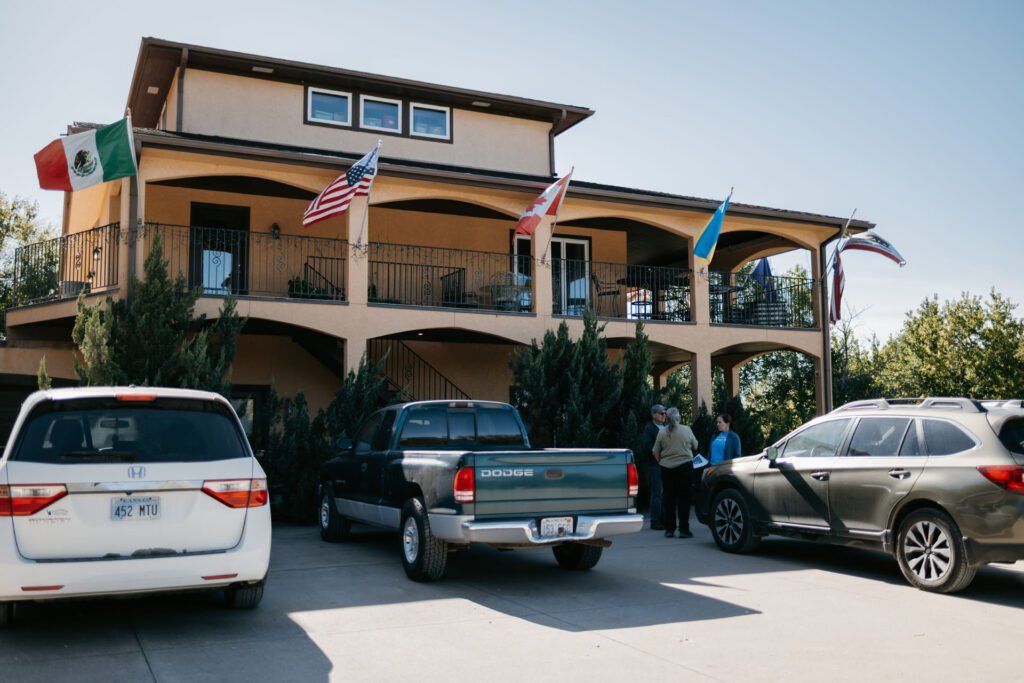
When building what would become Casa Somerset Bed and Breakfast in Miami County, Kansas, Mike Hursey said, “We had a lot of problems with the county.” So, he formed an agritourism group that would go to the county “to get things fixed that needed fixing.”
Now, “If people want to know about local food, they come to me.”
Hursey’s award-winning leadership style, honed over decades in corporate America, was to cultivate people around him, lift them up in ways that allowed everybody to gain. His goal as a “servant leader” had always been “to make people better than me, which in turn makes me better.”
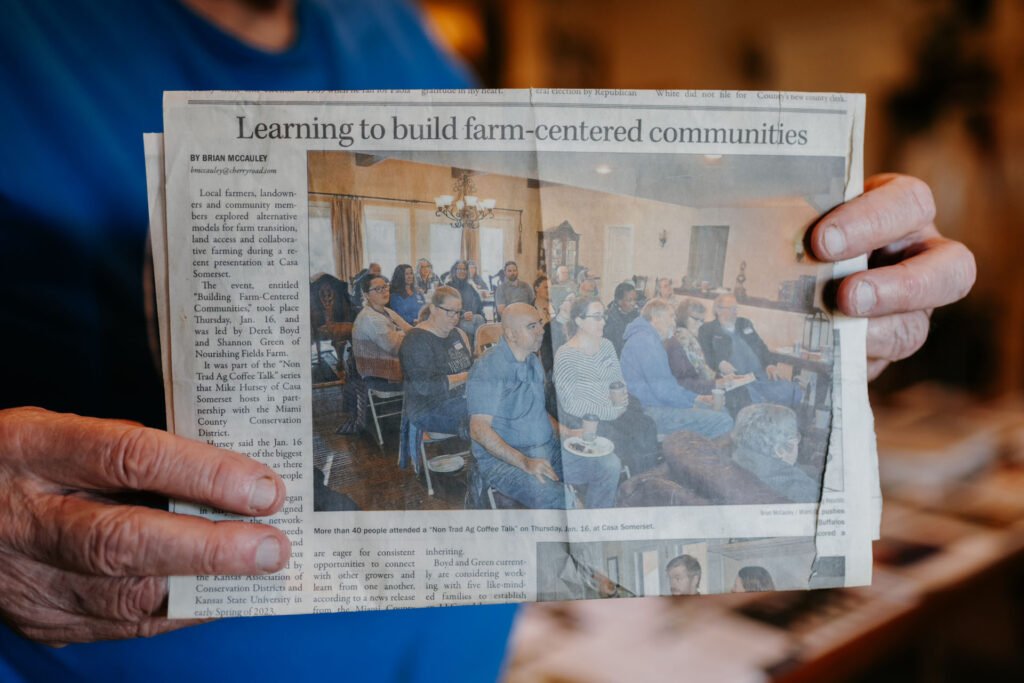
Hursey used his leadership skills to connect people in his local food community in and around Paola. He founded an agritourism group, farmer-to-farmer coffee talks, and AgriCluster Resilience and Expansion training—the first in Kansas—and used other formal and informal tools. He wanted to grow his local community of farmers, get back to “regenerative agriculture.” Casa Somerset “just gave me a pulpit” to do what he had always done anyway: connect people.
“I see the need for communities to support each other, and to educate people about buying food directly from local farmers; that’s my specialty.”
“I was raised in corporate America, but I’m not that anymore,” Hursey said. “I see the need for communities to support each other, and to educate people about buying food directly from local farmers; that’s my specialty. Education is the biggest key—and challenge. ”
“Mike has a selfless way of leading,” said Aileen Rueda-DaCosta, Partnership Director for Kansas Common Sense Fund. “He has this wisdom, joy, and desire to connect.”
“When you wake up in the morning, you have to do something,” he said. “Why not do something for people?”
Hursey’s interest in farming stemmed from buying a copy of Organic Gardening. He started reading about how herbicides affect not only soil but also the roots of plants that carry the poison up into the edible plant itself. It made sense to him. “Then I started getting into organic gardening”—before it became a trend. His favorite saying is “Everything starts with the soil.”
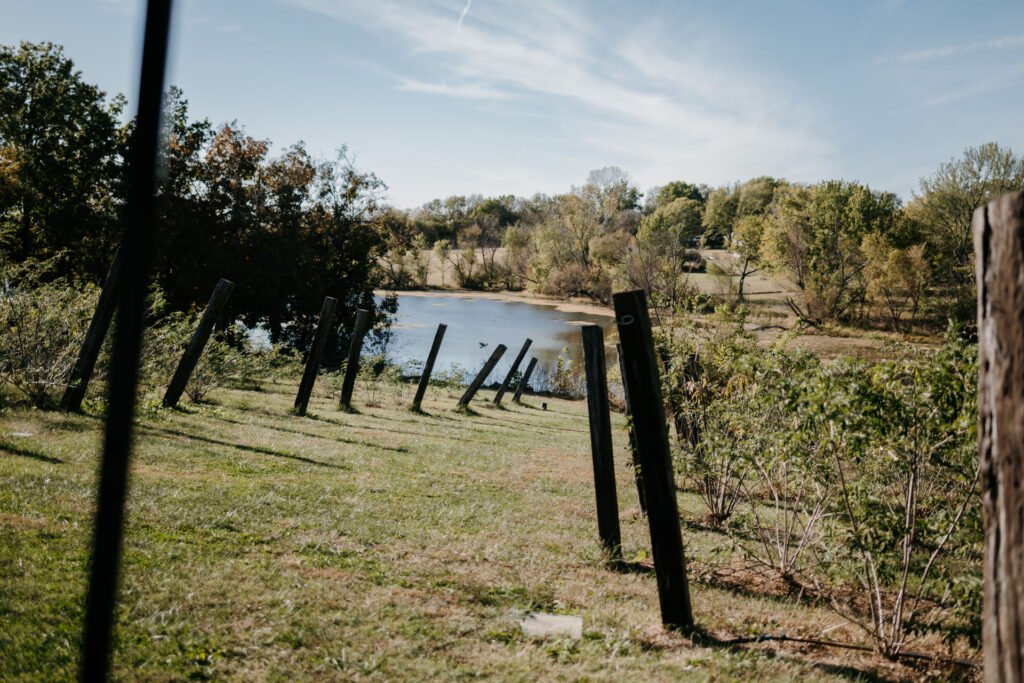
Casa Somerset reflects his ethos. Its website describes “an Italian Bed and Breakfast and sustainable learning center on a 10-acre organic farm” that, during Covid, hosted a farmers market free for local farmers to use to sell their produce. The B&B supports local food and sells a few items as well, honey and pickles among them, with a new venture into growing elderberries to make into syrup. Its learning center encourages kids to “learn about earth and soil,” and both the dinners it serves and the cooking classes it offers are sourced from local farmers.
Corporate to Country
Hursey pivoted to his current vocation from an unlikely direction: as a big-box store manager.
A “city boy,” he opened the first Kmart in Kansas City, Kansas. “Retail is what made my life,” he said, joking that as a struggling student with hearing problems, he wasn’t able to hear people tell him he couldn’t do things.
Later he shifted to an Oklahoma Walmart and then as manager of “the very littlest Walmart in the world in Wellington, Kansas.” In 1984, he was transferred to Paola, Kansas, to manage its Walmart. Hursey was mentored by none other than Sam Walton, the future megacorporation’s owner, who he described as down-to-earth, and in the mid-1990s won the first Sam Walton Excellence in Leadership Award. “I got to sit down with the richest man in the world one-on-one and talk about our failures, successes, and empowering people. Sam Walton’s favorite saying was ‘Our People Make the Difference.’”
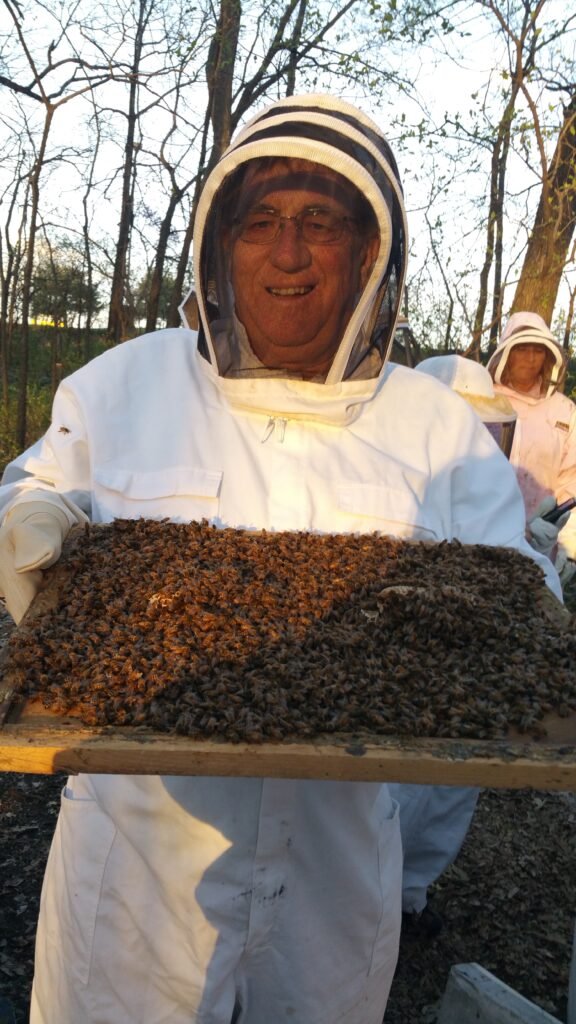
Several years into his management career, Hursey thought he’d give college a try. After aptitude testing, a Johnson County Community College counselor suggested going into culinary arts. He asked her what culinary meant. “And she said, ‘we have one of the best culinary schools in the nation.’ I said, ‘Sign me up for that.’”
He loved the classes and did well. In 1997 he found a cooking class in Italy. “I’d never been out of the country, so I hopped on a plane.” He was surrounded by history and different ways of living: “They took me to market every day, and watching that way of living was inspiring. People from all kinds of countries would sit at the table, tell stories; we ate too much, drank too much wine. It changed my life.”
He returned to JCCC after retiring and took a local food class attended by both culinary and agriculture people. He preaches that farmers should take basic professional cooking classes “because they learn what the chefs want, and how they want it delivered.” It can help farmers develop partnerships with restaurants.
Hursey did more than talk, gathering farmers and introducing them to chefs, and he began building Casa Somerset not long after.
One of his primary mantras as a “food connector” is the idea of establishing interconnecting geographic circles that, when done right, eliminate having to turn to corporate farms to buy needed items. With this model, ideally, anybody can find whatever they need from within a two-to-five-mile radius—a kind of Venn diagram of supply and demand.
“As we all grow, we’re overlapping, and our services and circles for providing food start overlapping—and that’s the way we create and help each other out,” he said. “Capitalism can work if we ‘grow our people.’ Local food farmers should not be in competition with each other.”
Local and National Challenges
“Elected officials and policy makers do not understand local food at all,” Hursey said, citing eggs as an example. “I’m not supposed to use farm-fresh eggs. Nothing to do with the health of the eggs; has to do with the size. They have to be graded. Some corporations put in that law. That just makes it harder for the small farmer to sell eggs. They don’t understand the laws they are making.”
He described a situation in his past as a guest chef in another area. He traveled to a market near the restaurant to buy tomatoes he liked that were grown at a farm near his own Paola home. “I said, this is ridiculous, why don’t I come out to your farm and buy them from you there?” But that turned out to be illegal because of a law mandating that only farms with a minimum size of 20 acres could sell directly from their sites. (The law has since been changed to a larger minimum.)
Hursey’s most recent project is growing elderberries to make into products. “I can sell my elderberry syrup because I’m licensed,” he said. “But I can’t serve or sell elderberry juice. We have to get a second license to do that.”
Growing Locally
Casa Somerset has partnered with the Miami County Conservation District to bring in farmers, teachers, eaters, interested businesses, and local politicians to provide a location for monthly meetings. “We have made huge strides,” Hursey said, noting that 30-50 people from at least 13 counties attend to hear speakers. “Some say, ‘I never knew that.’ Networking is just over the top.”
He noted that networking is key, and “That’s what I do well. ‘You know something about this? I can call this person.’” Digital networking helps, too: his food-based Facebook page initially had 80 followers; now it’s approaching 7,000, with more than 100,000 monthly views. “I’m reaching people; it’s building.”
Hursey urges farmers to get involved with each other and with their community. “Learn where your food comes from. Vote. Contact your representative. Join a local food group.”
For those not in his area who don’t know where to find a local food group?
“Contact me,” he said.
###