
Why Medicaid Expansion Matters: A Kansas Story of Public Service and Practical Care
When Sandy Praeger discusses Medicaid in Kansas, she does so with the clarity of someone who has spent decades working within the system. A life in Kansas politics, however, was never her plan. During her early marriage, she and her husband, Mark, lived in Colorado, California, and Washington during his medical training and military service. When that chapter ended, she made a simple decision: she “wanted to come back home” to Kansas.
“People thought we were absolutely nuts,” she laughs. What followed was not a quiet return but the beginning of a lifetime of public service shaped by a steady belief that public policy should make people’s lives better.
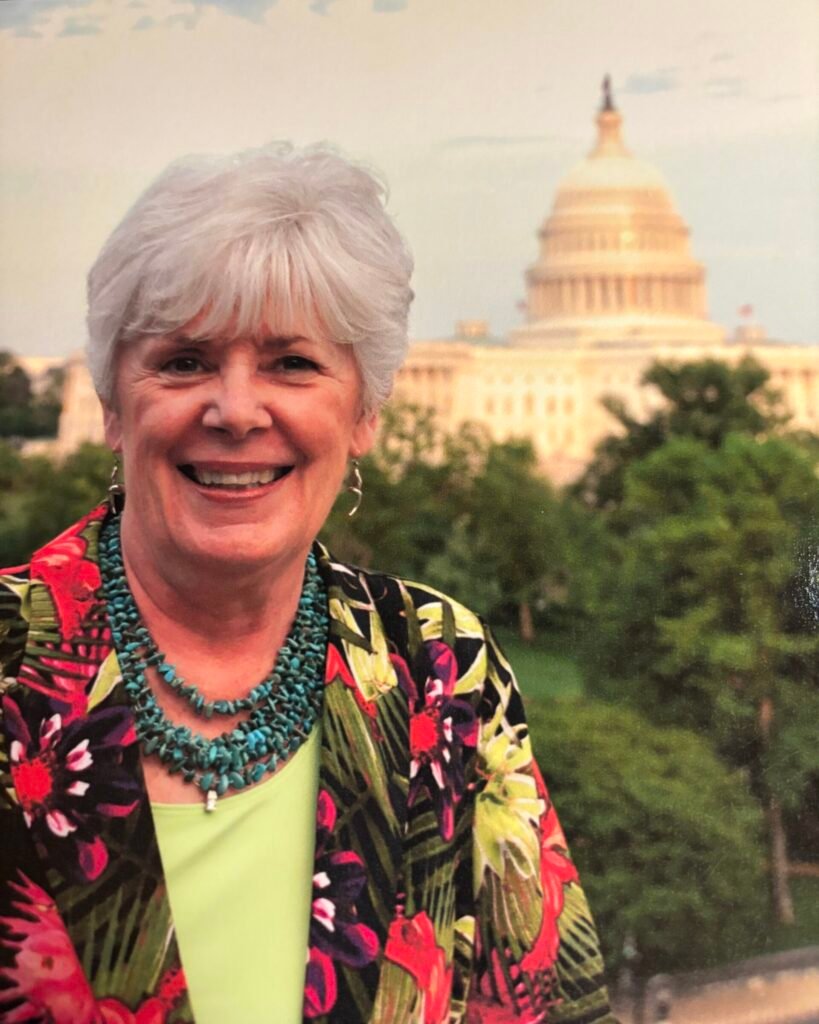
A Life Shaped by Service
A native of Paola, Praeger grew up running around her family’s furniture store. After a brief career as a teacher and years raising her two children, she entered public life after others encouraged her once, she jokes, “both kids could drive, and I didn’t need to be the chauffeur anymore.” She won a seat on the nonpartisan Lawrence City Commission in 1985, crediting her success to pragmatism and a commitment to facts. From there, her service continued as mayor of Lawrence, then state representative, state senator, and eventually a three-term Kansas Insurance Commissioner from 2003-2015.
Praeger describes working closely with then-Governor Kathleen Sebelius during a very pragmatic time, “when we were more of a balanced state.” “You have to view yourself as a public servant,” she explains, “My job was fabulous,” she said, because “every day you go to work and you’re helping people.” Healthcare had become her central focus, an interest shaped in part by being married to a doctor.
Regulating for People, Not Profits
There are only 11 states with elected insurance commissioners in the country; Kansas is one of them. The department under her leadership fought for residents who had been failed by insurance systems, restoring coverage and dignity.
“We want balance and good regulation that’s fair to the [insurance] companies,” but the fairness must go both ways, she argues. Some elected leaders across the country appear to be beholden to the insurance industry. Some insurance companies contributed to Praeger’s campaigns, but she says, “if you can’t take their money and still say no, you shouldn’t be in this business.” After a vote to eliminate caps on outpatient services for mental health, a lobbyist approached Praeger and asked why she had fought so hard for this outcome. “‘Why did you push so hard for that?’”, she recalled the lobbyist asking. She answered, “Because it was the right thing to do.”
The Consequences of Refusing Medicaid Expansion
When the Affordable Care Act (ACA) passed in 2010, the federal government assumed states would expand Medicaid. Federal funding for uncompensated care would be phased out accordingly, because more people would have health insurance. Kansas lawmakers refused to expand. Hospitals are still required by federal law to treat patients, but often without reimbursement. “That’s why so many rural hospitals are having serious financial issues,” Praeger says.
“If we want to get costs under control, people have to have access to healthcare,” she explains. Without coverage, people delay care until it becomes an emergency—requiring the most expensive type of care. “Nobody without insurance is going to get preventive care. You just wait until you’re sick…we have sicker people.” The result, she clarifies, is a sicker population, higher costs for everyone, and hospitals—especially rural hospitals—absorbing enormous losses.
Politics Over Practical Solutions
To Praeger, the resistance to expansion in Kansas has always been political rather than practical. Her frustration is palpable. Conversation was not possible with colleagues on her own side of the aisle: “They didn’t want anything to do with Obamacare … there was no conversation.” Governor Sam Brownback, for example, immediately returned a $30 million federal grant to help implement the ACA upon taking office in 2011.
Praeger recalls people saying they supported the Affordable Care Act but opposed “Obamacare,” not realizing they were the same law. “We laughed about it,” she said, “but it really happened.”
The refusal to expand Medicaid is, for Praeger, a textbook example of governance gone wrong. Kansas taxpayers continue to fund expansion in other states through federal taxes, yet the money goes to other states. Working Kansans—particularly those in low-wage, high-need sectors like childcare, food service, and eldercare—remain uninsured. Rural hospitals struggle to stay open under the weight of uncompensated care. Private insurance premiums rise, in part, because hospitals must shift their losses onto the insured population.
And yet, as she points out, more than 70% of Kansans support expansion. Even the Kansas Hospital Association and much of the medical community in the state supports Medicaid expansion. Her critique of Kansas policy today is direct: refusing expansion is fiscally irresponsible.
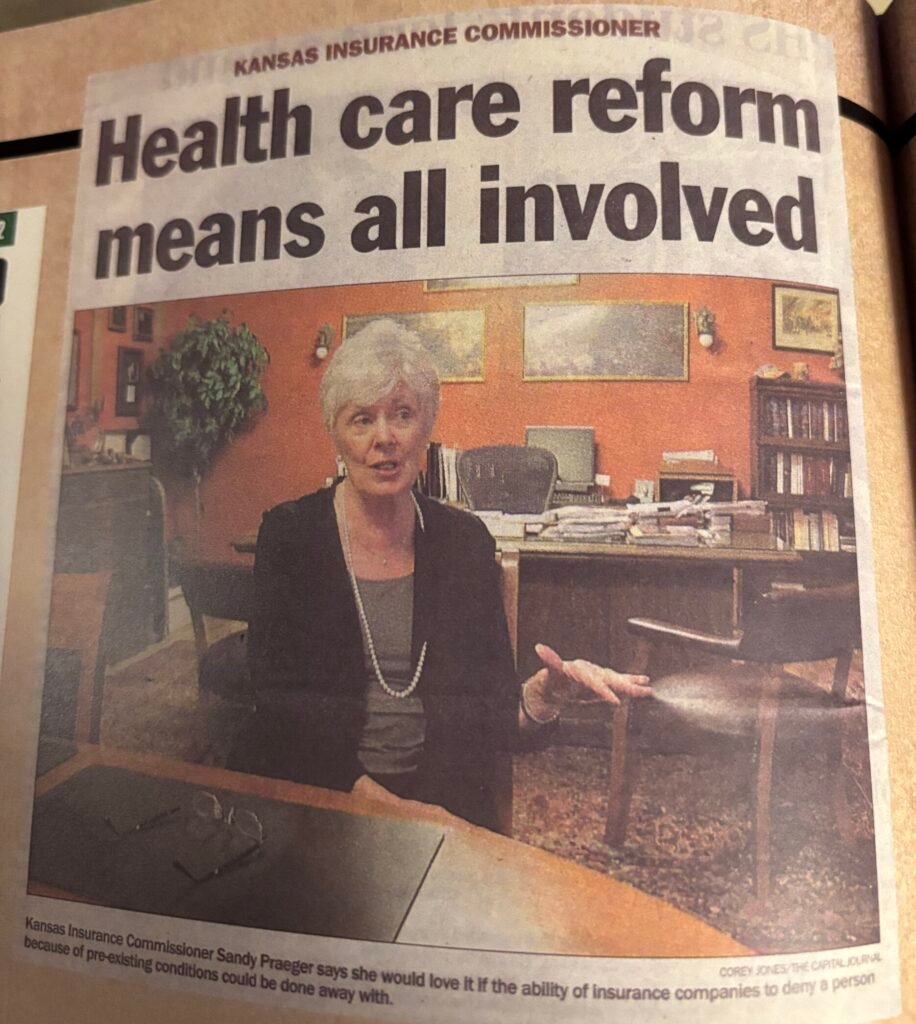
A Call for Evidence-Based Governance
Praeger’s worldview blends fiscal conservatism with social responsibility in a way that has become rare. “Fiscal conservatism is important,” she says. “It means you want to ask the questions and understand where the money’s going, what’s the data, what are the outcomes?” But, she adds, it does not mean refusing to take care of people. Good governance, she argues, requires both responsibility and imagination—two qualities she sees disappearing in public service.
Praeger would eventually like to see a single-payer system. She argues that insurance companies should not profit from money meant to provide care. “Right now,” she says, “we’re letting the insurance companies determine the healthcare services we receive.”
Ordinary People, Collective Action
The path forward, she articulates, depends on grassroots organization and public officials who listen and reflect the will of the people. She insists that civic engagement—voting, running for precinct positions, staying informed, contacting your state officials—remains essential.
Reflecting on the day she left office in 2015, Praeger remembers tearing up because she loved the work so much. “Helping people” was the core of why she worked so hard and remains central to how she describes that work today. She still meets monthly with two of her former staff members. They were, she says, “focused on doing the right thing, making sure people had their problems solved.”
For Praeger, public service was never about ideology. It was about fairness, competence, and viewing healthcare as a public good. And it was about Kansas—pragmatic, community-oriented Kansas—a place where good policy could still prevail. When asked what she hopes Kansans will do after hearing her story, Praeger is clear: change depends on ordinary people focusing their collective energy on building a base of informed, active citizens who can shift the balance over time. She believes it will require representatives to follow evidence, once again, rather than ideology. She hopes it can be so again.
###