Keeping Care Within Reach
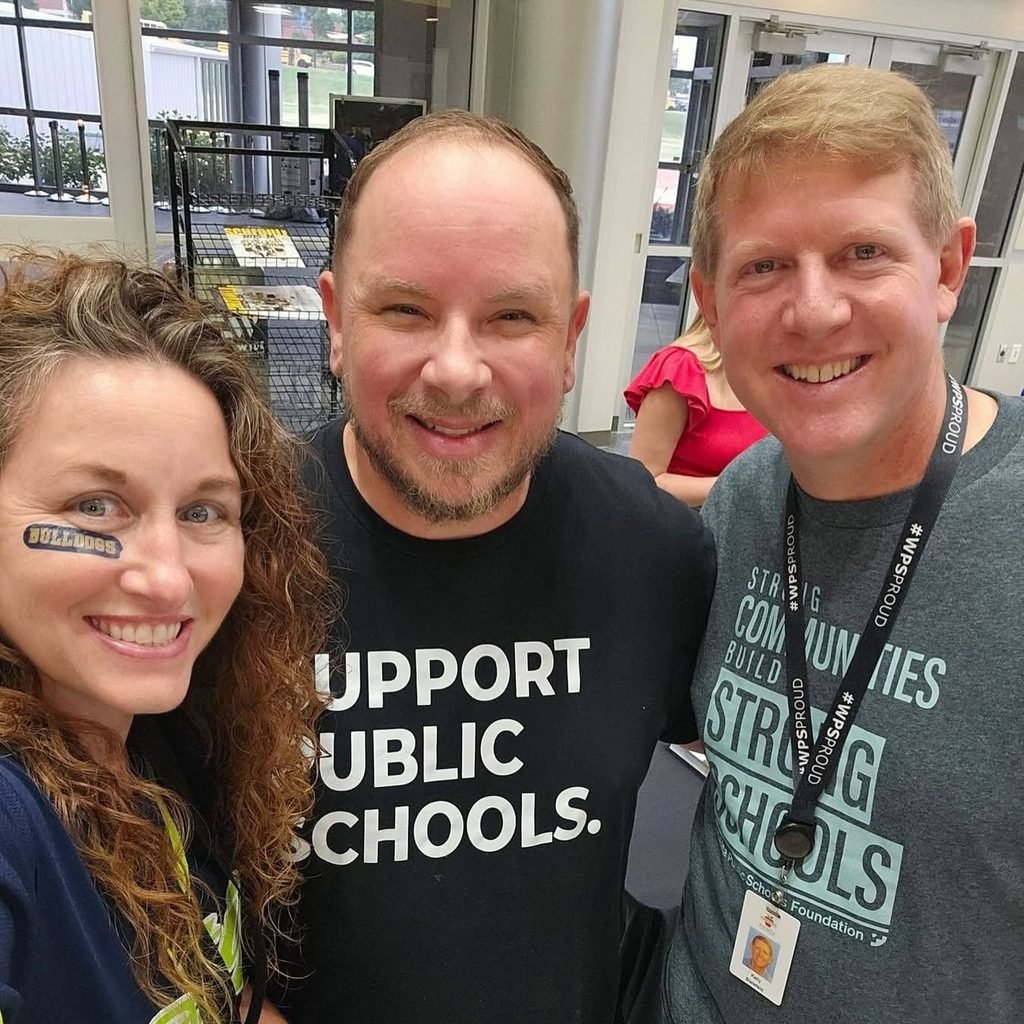
“I really believe that strong public schools equal strong communities,” said Terry Johnson, Executive Director of Project Teacher, noting that the more resources are invested in public schools, the greater the improvements will be in other issues.
He has thrown his heart into making his belief come true. Project Teacher collects and distributes free school supplies to teachers, supporting more than 60,000 students.

“When I see people struggling, I have a lot of empathy for them,” Johnson said. “Not on a counselor term, but ‘what are some things that we can help change?’ I have always cared about other people, wanting to see the community I live in become stronger, so Project Teacher was a natural response from that desire.”
Right out of high school, Johnson met his wife, Rachel, through church ministry work. Rachel moved on to public school teaching, and Terry found a new church. It was there that the couple became active in outreach work. Project Teacher came from their faith and grew quickly until they realized it needed to be a self-standing nonprofit.
Project Teacher began serving a handful of Wichita schools, then grew throughout the city, eventually spreading to serve the Wichita area and beyond. It later became a statewide initiative. “So, I kind of have this lofty goal of serving every district in the state,” he said.
The Ruler Thing
The seeds of Project Teacher were planted in 2001. “Right after 9/11, Rachel and I were watching the “Today” show.” They saw an episode about a nonprofit called Schoolhouse Supplies that provided free school supplies for teachers.
“We loved the idea, thought it was the coolest thing,” Johnson said. “So, for about 10 years, when we’d get frustrated with our jobs, we’d say, ‘You know what we need to do?’ We called it the Ruler Thing.”
A series of events led them from talk to action. Rachel had begun student teaching. Their oldest son Owen was in first grade. The three had an end-of-week ritual; they’d stop and get coffee for Rachel, then drive to Owen and Rachel’s school. Terry took Owen to his classroom, then took Rachel’s drink to her classroom and said goodbye, then went back to the boy’s room and peeked in.
“We did this thing where we’d tap our nose, and that means ‘I love you,’ so I did that, he did that,” and Terry left. Shortly after, news broke about the Sandy Hook school shooting. “A bunch of first- and second-graders in the classroom. One of the educators shot and killed was a student teacher just starting her profession.”
A few months later, a news show covered an Oklahoma tornado. Terry saw an eerily similar image of teachers and students exiting classrooms, holding hands. Later, he learned that teachers had called out, “I love you! I love you!” A teacher explained that “we wanted the last thing the kids heard to be that somebody loves them.”
“It just hit me,” Johnson said. “Why don’t our communities support our teachers more? They’re frickin’ heroes. They show up when parents don’t; they bring food when families don’t have it. They stay in late; when students have athletic events, they show up, even if they had them back in first and second grade. They invest so much in the lives of their kids. The community needs to invest in this.”
“I told my wife I think it’s time to start this Ruler Thing,” Johnson said.
Supporting Teachers
The Johnsons had assumed that Wichita was large enough to support teachers’ basic supply needs. “I realized that they don’t; teachers have to pay for them out of their own pockets.”
During the time Project Teacher has been active, school funding cuts have halved supply budgets of $500, or cut even deeper, sometimes to zero, with specific restrictions on how teachers can spend the funds. “My biggest surprise was how big the need really was,” Johnson said. “We just saw Project Teacher as a way to appreciate teachers. We didn’t see it as filling a gap in the community, that it really needed the support.”
The support went beyond the supplies. In end-of-year surveys Johnson gave teachers, “100 percent claimed that Project Teacher helped them know they’re appreciated by more than just the parents in the classroom.”
Here, There, Everywhere
“Teachers come in from suburban schools; we have teachers who don’t come in from intercity urban schools because they think other teachers have a bigger need than they do,” Johnson said. He also cited teachers from wealthy suburbs who stay away in the belief that others have greater needs, even though they, too, must often buy their own classroom supplies. “The easiest demo is ‘teachers.’ It doesn’t matter where they are.”
And yet, when approaching a suburban school district to offer their services, “We’d go in and speak to whoever and they’d say, oh we’re good, we have a foundation, support the Wichita schools, they need it more.”
“If we can help teachers feel supported, maybe we can help them stay in their job a little bit longer,” Johnson said. “It stinks to know you meet amazing teachers with kids that have life-changing experiences in their classrooms, and two years later, they’re working at Costco because the burden is a little bit less, the pay is not bad, and they feel less stressed.”
He noted that first- and second-year teachers go through a disenchantment period, questioning their career choice. “They go into it really excited, they’re young, have energy — and those are the teachers we want to keep around, too,” he said. “It took a couple years before we realized that we are helping retention as well.”
What We Can Do
“I have respect for politicians,” Johnson said. “They have a lot of factors to take into consideration. But I wish that they could really see the value of public education. In rural communities, public education is the anchor. Sometimes it is the workforce; sometimes it’s the one place that brings the community together on a Friday night for football or basketball games. Even in larger places like Wichita, Topeka, or Salina, they are still anchors.”

Johnson believes fully funded classrooms are achievable. More dollars to non-title schools (those receiving no Federal funding) for basic building needs — toilet paper, coffee filters — would release enough funds for school districts to save money by buying pencils, paper, crayons, and other classroom supplies in bulk.
As to what individuals can do, “If people can just say thank you to a teacher they know, that will go a lot further than they realize.” When Rachel comes back from Teacher Appreciation Week, she points out notes from students or a parent’s email. “She talks about those things, and I know they go pretty far in the life of a school teacher. I think teachers feel unseen a lot of times; if we can just see them.”
Johnson said that teachers will always spend money on their students. “But if we can eliminate them spending money on basic things that should already be in a classroom, then teachers will spend money on weird stuff. Rachel bought Little Nerds candy boxes because she’s a math teacher and that’s how she can teach volume. It’s a way to enhance her teaching.”
“We can get there, but on a state and federal level, it requires more dollars being funded, and on a local level it requires more of us to step up and say, ‘What do you need? How can we help?’”
###