
The Hardings: Setting a Table Big Enough for Everyone
Jeanette Harding will tell you she is two things above all else: a mom and a creative. But spend any time with her and a third thing becomes clear–she is a connector. Someone who has built her entire life around the radical, simple idea that the best thing you can do for a community is pull up a chair and share a meal with someone different from you.
It’s a value she inherited.
Jeanette grew up in Wichita, one of the kids her parents sent intentionally into the city’s public magnet schools–they wanted her surrounded by people who didn’t look, pray, or think exactly like her family did. She remembers fondly when her brother’s alternative rock band needed a place to practice, and no other parents would open their doors; Jeanette’s parents did. They then went further, buying hay bales for the backyard so the kids could have a real concert. It was a small act, but it carried a message Jeanette absorbed early: community is something you build on purpose, and it looks like a lot of different people in the same space.

Years later, at Northeast Magnet, Jeanette remembers a friend who moved back to Pakistan in middle school, and another who was Iranian and Muslim, who made, Jeanette recalls warmly, the most delicious cranberry turmeric rice. She remembers Earhart Elementary’s approach to Thanksgiving: butcher paper rolled out across the gym floor, the whole school gathered together with different foods from different families spread across the table. Jeanette remembers a friend named Zadi, her elementary school best friend, whose family practiced the Bahá’í faith, a religion that drew confused stares from some classmates.
“My parents on purpose wanted Wichita Public Schools for that reason,” Jeanette says. “And then we continued that on for my kids.”
When it came time to choose a school for her son Victor, now a high schooler, the decision came easily. Victor started at Hyde Magnet, with its international and leadership focus. Teachers there organized an Ellis Island Day, shared food from many cultures, and built the same kind of intentional community Jeanette had grown up in.
One of those teachers changed everything.
Mrs. Kitchen was Victor’s second-grade teacher. She was a woman from Derby who chose to drive into Wichita every day because, as she told Jeanette, she believed in Wichita Public Schools more than any district in the area for their commitment to inclusion. One day, she pulled Jeanette aside. She told Jeanette that Victor reminded her of her brother, who had struggled in school and been diagnosed with autism as an adult. She thought Jeanette might want to check in with their doctor.
“It wasn’t like, ‘your kid needs help,'” Jeanette remembers. “It was like, ‘I want him to have all the support we can offer.’ She just got him.”
That conversation led to Victor’s autism diagnosis. That moment Jeanette describes as both a gift and a complication, an answer that also became a label. Victor, who speaks with the directness and precision of someone who has thought carefully about most things, puts it plainly: “It has become so much a part of me that I couldn’t really get away with acting like I’m not.” He has learned to lean into that visibility rather than away from it.
Victor is not a kid who blends in, and he has decided he doesn’t want to be. At his high school, he found teachers who meet him where he is. He talks about Ms. Simmons, his English teacher and Individualized Education Program (IEP) manager, with appreciation. “She doesn’t see us like things she needs to grade,” Victor says. “She sees us as kids she needs to help. She’s very human.” Ms. Simmons also keeps, Victor notes with a certain affection, a secret chip stash because some kids don’t get enough at lunch, and she’s not going to let that stop a student from learning.
Victor participates in 4-H, where he was selected to attend the regional day and read at a public event. His gifted teacher drove out to watch him. He has paged at the Kansas State Capitol through Senator Silas Miller, a Northeast Magnet alumnus and, as Jeanette points out, once the nerdy science kid in her own high school hallways.
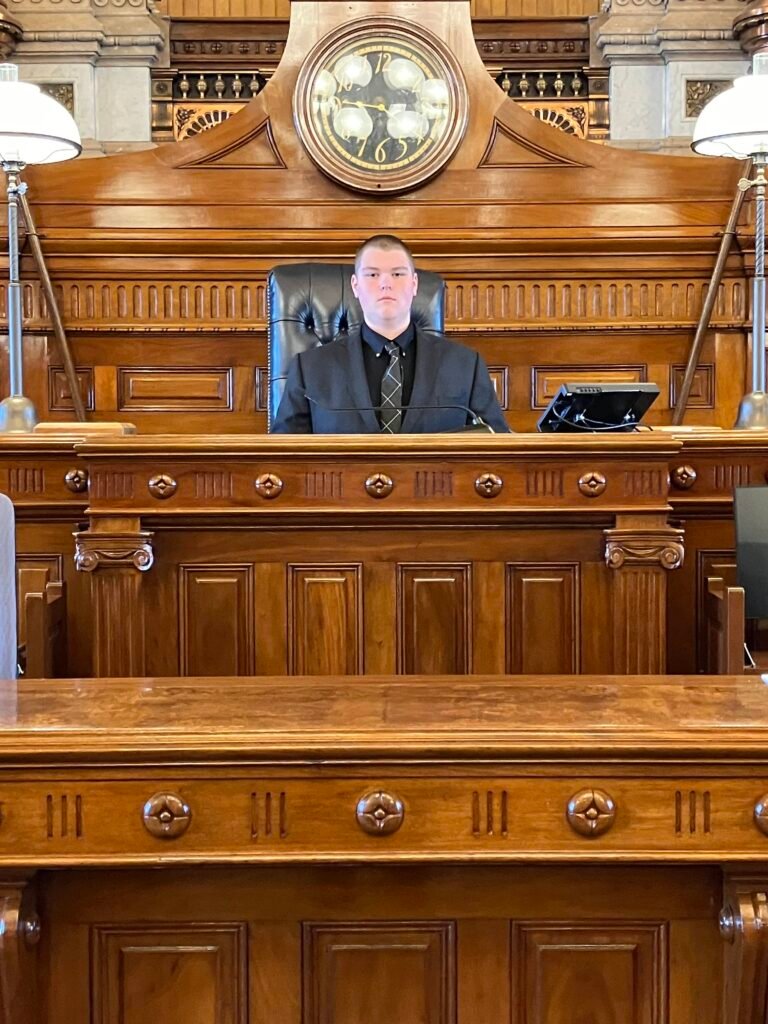
There was a day Victor paged at the Capitol that he will not forget. The Senate was in session, and the vote on the table was whether to override the governor’s veto of the “bathroom bill,” legislation that would restrict transgender students’ access to school restrooms. The vote passed. Victor was standing on the Senate floor when it happened.
Victor pays attention to his queer classmates in a way that many adults don’t. He notices who goes quiet. He notices who avoids the bathrooms entirely. “A lot of the queer kids fear for their lives,” he says, with the matter-of-fact weight of someone describing something he’s watched firsthand. The bathroom bill that passed the day he stood on the Senate floor is not, for Victor, an abstraction. It is the reason certain kids in his school move through the building differently than everyone else.
When asked what he wants people to think or feel after reading his story, Victor doesn’t hesitate: “Feel angry about that–but don’t feel hate. Hate is only the mother to more hate. Feel anger, but make the anger come from the compassion and empathy you have. And then tell someone. Tell people that there are literal children who fear for their lives daily.”
He draws a straight line from the present moment back through history. From two-spirit Native American traditions to ancient Greece, pointing out that queer people have existed across all of human time. “You just refuse to see,” he says.
Jeanette is proud of Victor, and she is proud of her own father, who spent his career protesting, who was one of the first social workers placed in Wichita’s Children’s Home, who moved to this city on purpose to do good. These things are connected. They always have been.
Beyond raising her two sons, Jeanette stays rooted in her community through her work at Wichita Documenters, where she attends public zoning meetings, taking careful notes, making the processes of local government legible to the people around her. She has fought, successfully, to protect a neighborhood playground from being demolished for a parking lot. She shows up at District Advisory Board meetings and knows how to mobilize her neighbors when a zoning case is about to slip through on a consent vote without public comment. “Because I’ve learned this stuff,” she says simply, “the neighbors can come to me, and we can actually make positive changes and be heard.”
She pictures herself, five or 10 years from now, still in that role: community connector. Still gathering people together. Still setting a table big enough for everyone–the grunge band kids, the kids with IEPs, the kids who pray differently, the kids who can’t afford winter coats, the kids who just want to use the bathroom without being afraid.
Victor pictures himself on the front lines. Peacefully fighting. “I enjoy the fact that I know people can’t drown me out,” he says. “If you yell louder than they can drown you, then what can they do to stop people from joining?”
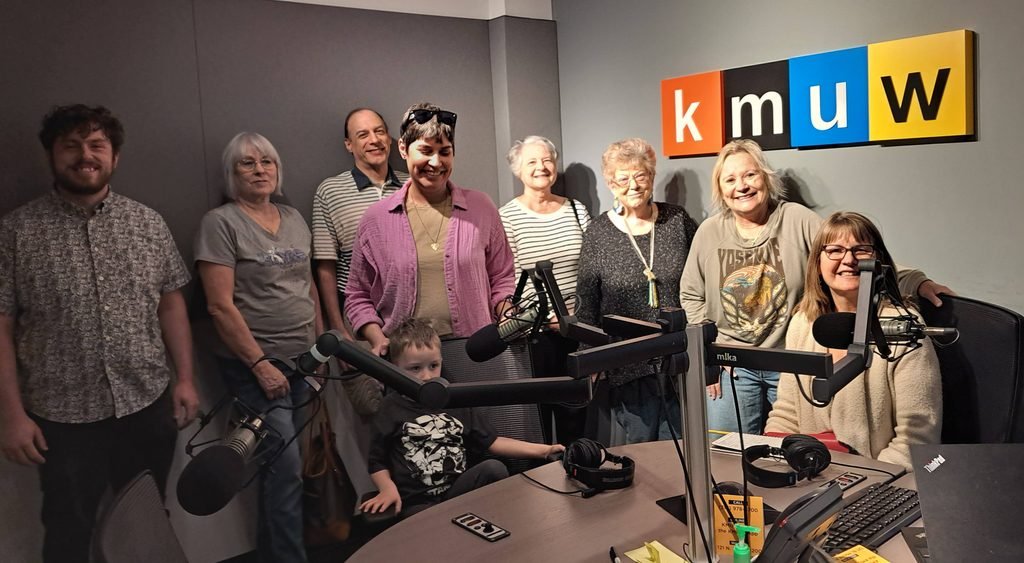
Jeanette smiles. “I just want everybody to learn how wonderful it is to share a meal with somebody that’s different than you. By the end, you can always find a connection.”
In Wichita, the Hardings are proof of that. And they’re just getting started.
###