
Starting Over, Starting Again
Wayne Gottstine has spent his life building his successes from scratch. Every show booked, every album recorded, every fan won over was all the work of an independent musician who answers to no one but his own hustle.
He lives in Lawrence, Kansas, with his life partner Kelly. She is, in his words, a pillar of the community. Wayne is that kind of person too. He plays free concerts in the streets, puts together shows at the local venue Lucia with his band Split Lip Rayfield, and shows up with this talent for community events for voter registration at the Granada.
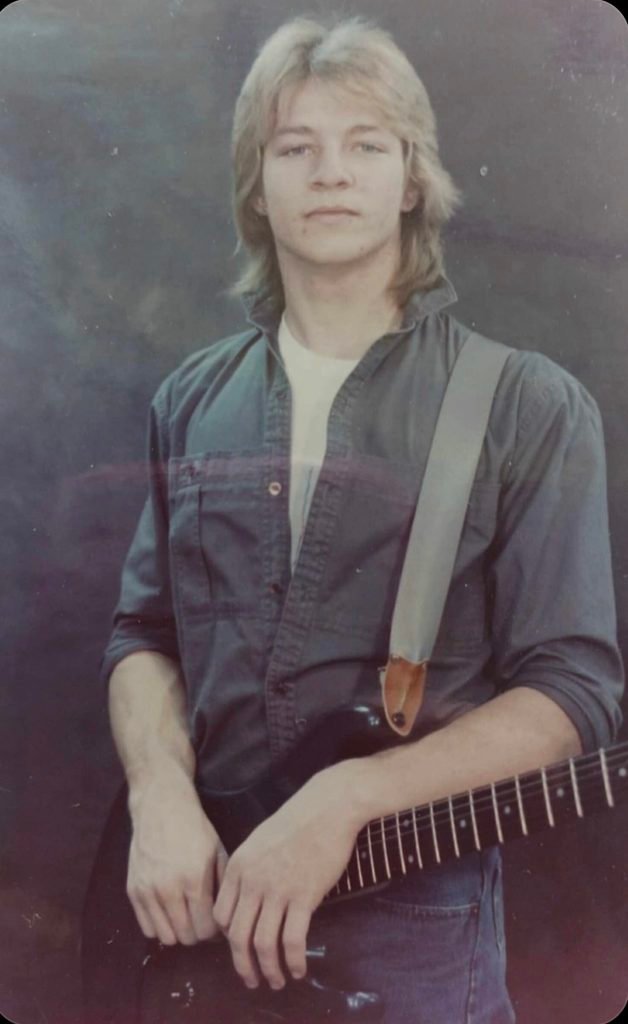
Music has never been on the back burner for Wayne; it’s the makeup of who he is.
Which is why February 5, 2021, changed everything.
The Cough That Wouldn’t Quit
Wayne had been to Colorado in January. It was cold, windy, dusty, and he came home with a cough he couldn’t shake. He went to an immediate care clinic. The doctor took a chest X-ray, didn’t like what he saw, and sent Wayne to Stormont Vail in Topeka.
It was pneumonia, and then it was more than pneumonia. A CT scan that night showed a mass in his lung. A bronchoscopy a few days later confirmed it. The tumor was roughly the size of his hand, sitting in the bottom lobe of his right lung.
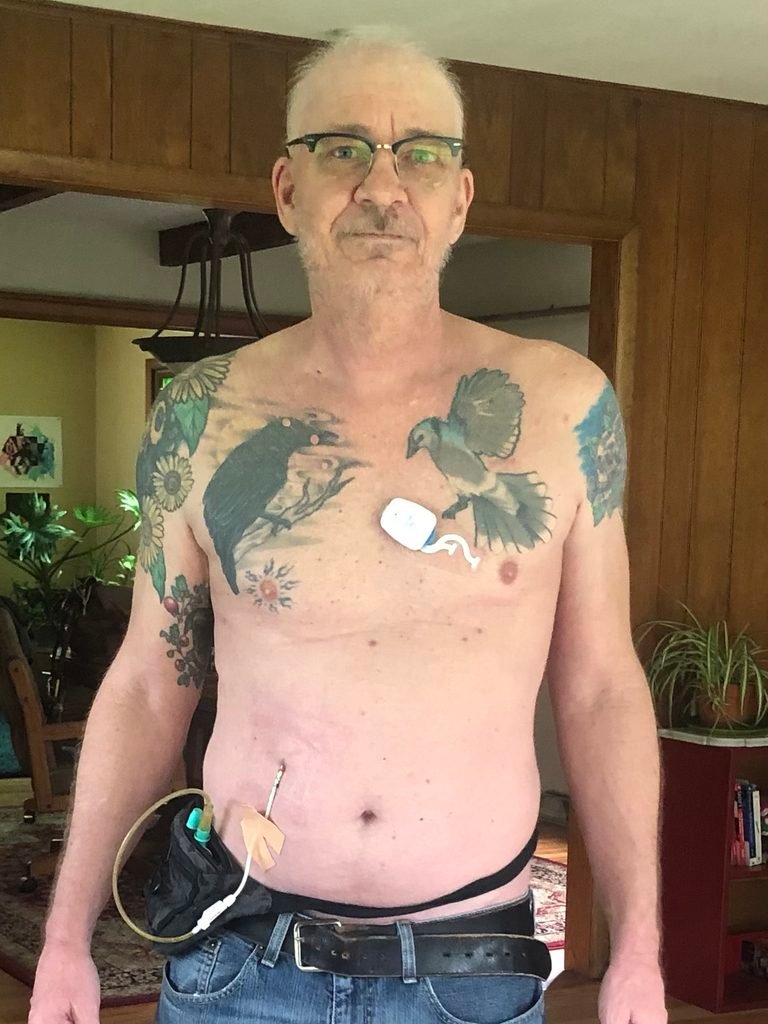
Stage four lung cancer. He also had clear cell renal carcinoma, kidney cancer, on the outside of his kidney.
“That was a life-changing moment,” Wayne said.
The treatment that followed was relentless: four doses of cisplatin, 12 doses of etoposide, 28 doses of immunotherapy, and 33 rounds of radiation. His gallbladder came out in the middle of all of it. He had a Pleurex tube draining fluid from his side and a biliary tube for two months. Eventually, his cancer returned, and he underwent a bilobectomy, the removal of two lobes of his right lung. Lymph nodes went with them.
He still has his port in. His doctors have never used the words “remission” or “cancer-free.” Instead, they say there is “no evidence of disease.”
“I feel positive that we’re going to beat this,” Wayne said. “But 90 percent of people who had cancer at the stage where I was don’t survive.”
No Boss to Call
When the diagnosis came in, Wayne did what anyone would do: he tried to figure out how to keep going.
What he couldn’t do was call an employer. There was no HR department, no leave policy, no short-term disability insurance. He is self-employed. His income comes from shows played and albums sold. When he can’t perform, there is no money coming in.
“I had some money saved,” he said. “But I didn’t play a show for 18 months after my first round of chemo.”
Eighteen months. At roughly $50,000 to $60,000 in lost income – a conservative estimate of what he would have earned – that’s the first number. It doesn’t include the bills.
Wayne ran the math out loud, the way someone does when they’ve had to think about it too many times. Cisplatin runs about $55,000 a dose. Etoposide, $35,000. Immunotherapy, $20,000 a dose. He spent roughly 40 days in the hospital over the course of his treatment, so around $11,000 a night. The bilobectomy alone was a $185,000 surgery. His total medical bills are over $2 million.
Insurance covered most of it. But “most” still left plenty behind. His annual deductible is $7,500. He’s had two CT scans this year alone and $3,500 out of pocket so far, and he hasn’t hit his deductible yet. Radiation charges keep appearing on separate bills, $125 here, $125 there, under billing categories he’s never been able to fully decode.
“I’m a songwriter,” he said. “I’m not a healthcare attorney.”
To keep insurance at all, Wayne has to keep his income under $35,000 a year. Earn more, and his premium on the Marketplace plan climbs so fast the math stops working. So he caps his bookings. He limits how many shows he takes. He manages his career around an income ceiling that has nothing to do with what he’s capable of earning.
“If I make $3,000 a month, all of a sudden my insurance rate is $1,200,” he said. “And my deductible is $7,500. Right off the bat, there’s $20,000 out of your pocket every year.”
The only reason he and Kelly have stayed afloat is that they owned their homes outright before any of this happened. They sold both houses, pooled the money, and bought a house with cash.
“If we had house payments, we would have lost the house,” Wayne said. “The only way we survived was that we’d been homeowners long enough to do that.”
For someone without that foundation–someone renting, someone younger, someone without a partner–the situation would have looked different. He knows that.
Getting the Ball Rolling … Again
Even beyond the financial cost, there is something harder to put a number on. What does it mean to lose 18 months of momentum when your career depends entirely on showing up?
When you are a working musician, Wayne explained, everything is maintenance. You keep relationships warm, you stay in contact with promoters, you push new material to keep people interested. It’s not always glamorous, but it’s constant communication, logistics, hustle, repeated across dozens of people and venues.
When you get sick and go dark, that work disappears.
“When you’re like right now–rolling, shows booked, everything a maintenance thing–and then you get sick for 18 months, you have to start that ball rolling from the absolute beginning.”
And then he had to do it twice. The cancer returned. Another diagnosis, another surgery, another recovery, another rebuild.
“Coming back once is hard enough,” he said. “Doing it twice, rebuilding your body twice in five years.”
There’s a social dimension to it too. When someone is out of the room for a long time, people move on. Slots get filled. Networks reset. For a self-employed person, there is no job to come back to; you simply have to reconstruct the job while you’re reconstructing yourself.
Paid leave, for Wayne, is the thing that would have let him stop doing those calculations. It’s the safety net that might have meant he didn’t have to choose between his income cap and his health. It’s the floor that was never there and that he had to build out of savings, a paid-off house, and a partner who helped carry what he couldn’t.
“As a nation, we cannot continue to do this financially to our citizens,” he said. “Medical care should not destroy your present, your future, your retirement. This is not an entitlement. This is a basic human right. And it’s an investment because if we have healthy people, we have happy people.”
Cancer Is a Lonely Business
Wayne was diagnosed in February 2021, still during a pandemic. The isolation that came with treatment landed on top of an already-isolated world.
He is, by nature, an extrovert. A performer. Someone whose whole life runs on being in a room with other people.
“Cancer is a lonely business,” he said.
In the months after his diagnosis, he found himself depressed, though he didn’t quite recognize it at first. A neuropathy medication his doctors prescribed turned out to also be an antidepressant, and it shifted something.
“After about three weeks, I was waking up thinking: it’s great to be alive,” he said. He’d recommend that anyone going through cancer explore that option. Not just the physical treatment, but the emotional support that makes it possible to keep going.
What carried him most, though, was music and the people around it.
“Without music, I don’t think I would have done as well,” he said. “It’s been everything.”
And then there was his cancer team. A loose, informal community of people who have walked similar roads. He’s lost about 10 of them. The rest are still in touch, checking in, and showing up however they can.
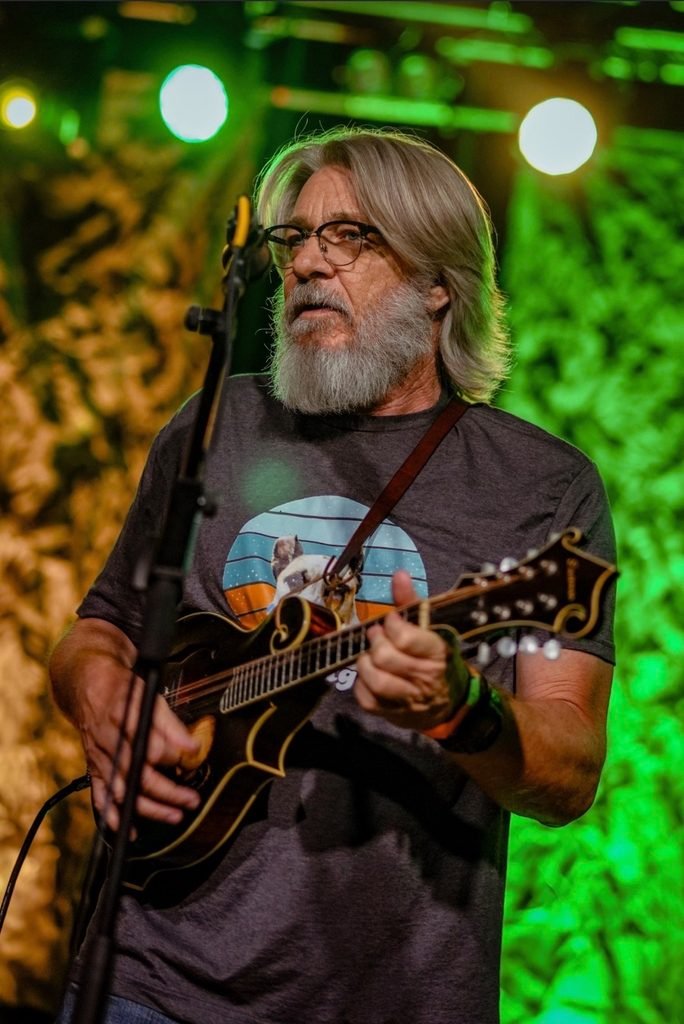
One story stayed with him. A friend in Lawrence was in the final weeks of his life. His wife booked local musicians, Wayne among them, to come play in their garden three nights a week for those last six weeks.
“He just wanted to see it,” Wayne said.
Those concerts weren’t charity in Wayne’s eyes. They were community doing what community does when policy doesn’t; filling in and refusing to let someone face it alone.
Rolling Again
Right now, Wayne is rolling. Shows are booked. A new album is in progress, and he’s heading into the recording studio next month. He played a voter registration concert at the Granada and Lucia, part of a local effort to get people engaged.
He shares his story online because people have told him it made them quit smoking.
“I want people to feel like they can win,” he said. “I don’t want them to feel overwhelmed by the finances or the fear. First, take care of your health. Try to separate the finances from your health; it’s daunting, I know. But sometimes you’re going to have to reach out to community. Sometimes you’re going to have to start a GoFundMe. I hate that it has to be that way. But don’t be afraid to reach out.”
“The most important thing is that you’re alive, and that you’re with your people.”
###