Two Communities, One Table
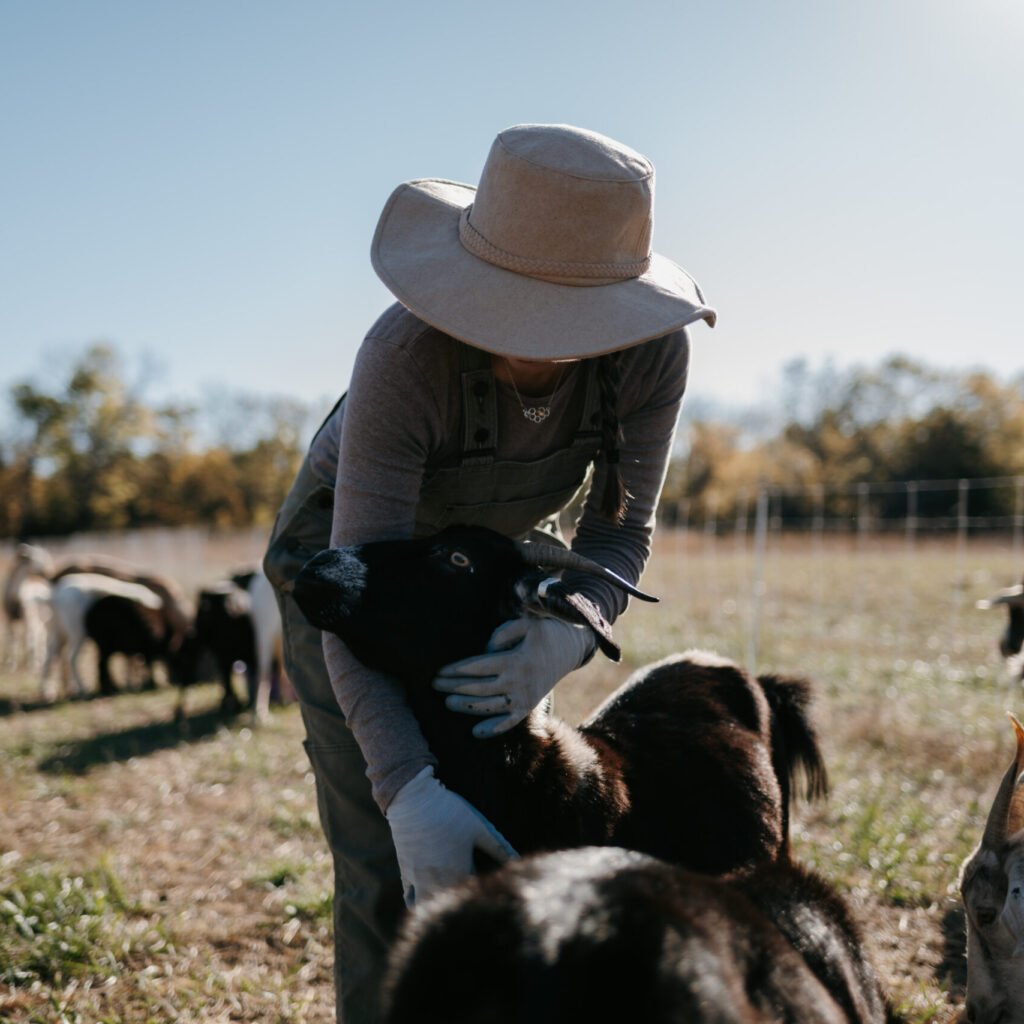
By Tina Carlson’s own description, there are two versions of herself. There’s the woman who spent 22 years in neurosurgery, standing beside brain and spine surgeons through more operations than she can count. And then there’s the woman in overalls and work boots, walking out to check on her goats. She thinks of it the way her teenage daughters think about the costume-change videos they make on their phones – one outfit, then a transformation, and suddenly someone new. “There’s the city Tina,” she says, “then there’s the country Tina.”
Both are real. And lately, Tina has been thinking about everything that lives in the space between them.
For most of her adult life, she carried a single title: PA – physician assistant. It was her identity, the thing she led with. “I worked in the medical world for the past 22 years,” she says, “doing brain and spine.” She was good at it. She trained the people who came in after her.
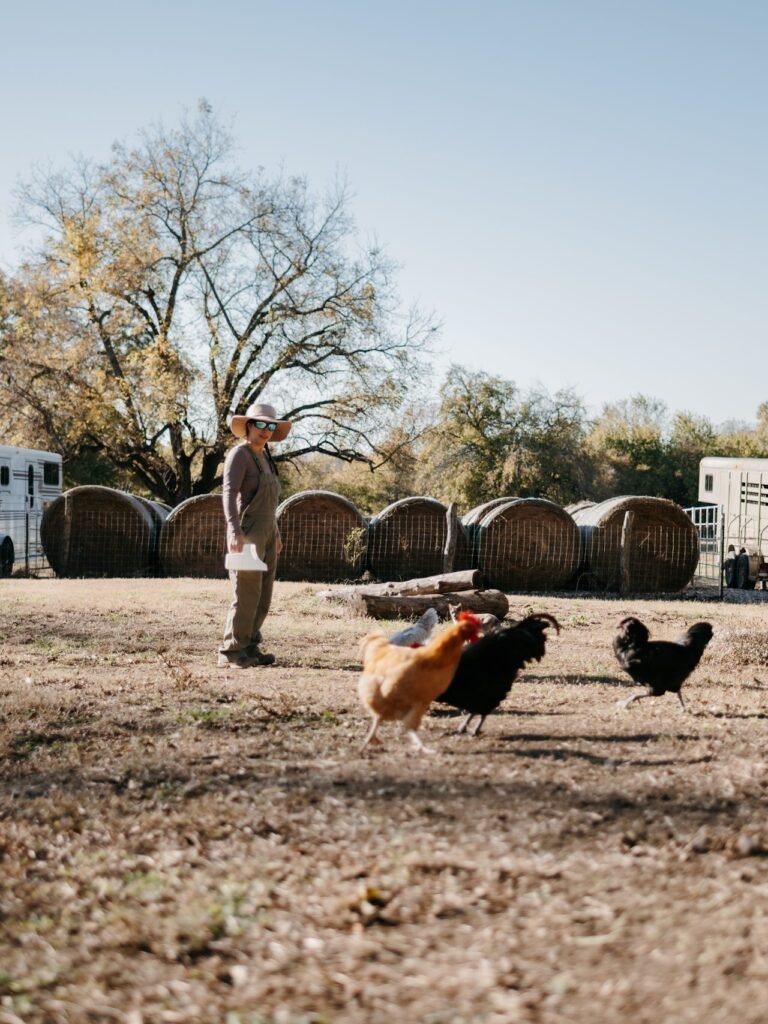
That work surrounded her with one kind of brilliance: “incredibly intelligent brain surgeons,” she says, PAs who were “amazingly educated and intelligent and motivated and career driven.” But over the last 10 years, a second world opened up to her. When she and her husband bought their place in the country. A farm, their version of a beach house or a ski trip. She met a different kind of expert. Farmers. Ranchers. Producers. People “so talented and knowledgeable in so many other ways,” she says, in skills she worries the rest of us are losing. How do you raise a chicken? How do you butcher one? “We’re kind of losing those [skills].”
Standing in both worlds, she started asking a question that has since become a plan: how do you bring them together?
The question has a beginning, and Tina can point to it. She was in a small-town grocery store, looking for a roast to put in the crock pot, and the meat case was nearly empty. “There was literally no meat there,” she says, one piece of “brown something or another” she wouldn’t have called meat. In the city, she’d have had 20 cuts of beef to choose from. Here, there was almost nothing. And directly across the road from the store, cows were grazing in a field. “There’s a cow right there that I could reach out and touch,” she remembers thinking, “and there’s no meat on the shelf.”
It stuck with her. Then came a conversation with a neighbor who raises Black Angus, as nearly everyone around her does. She asked him why he’d chosen the breed, did he like the way it tasted? “We don’t eat them, we sell them,” he told her. You don’t eat the cow you raised. “What am I going to do with a whole cow? It’s just me and my wife.” So where, she asked, did he buy his beef? From the city. Grocery pickup.
Tina is the first to tell you she is not a traditional farmer. No one in her family farmed; neither did anyone in her husband’s. “Everything we’ve learned, we’ve learned the hard way,” she says. She read every book there was about chickens before she bought her first one. She and her husband planted an orchard with pears, apples, cherries, and watched most of it come to nothing, then learned that walnuts, pecans, and persimmons are native here and flourish. “The only way you’re going to learn is by actually doing it,” she says. “There’s book smarts, and then there’s life-experience smarts.”
Skills she brought from her old life mattered more than she expected: the most vital skill of her medical career was talking to and understanding people. In a 30-minute office visit, she had to earn trust from a stranger so they would share the most private details of their life. “I’m not a social person,” she says, “but I had to learn that skill.” She learned to shift her language depending on who was sitting across from her – a neurosurgeon one minute, a frightened patient the next, and, later, farmers in her community.
And then there’s the part of her that needs no translation at all. “I’ve loved animals and plants since I was little,” she says she still has a scar on her knee from chasing a rooster as a child. For a long time she assumed everyone could do what she does: keep goats, raise roosters, coax a tomato plant into bearing. “That’s the thing that’s in me,” she says. “I could easily share it with anyone.”
Ask Tina what moves her most, and the answer is accessibility. She keeps coming back to something simple. “Every animal and human needs three basic things,” she says. “Food, water, shelter.” She learned it young, and painfully: a college friend once gave her a red-eyed tree frog for her birthday, handed over in a plastic bag from the pet store, and with nowhere to keep it and nothing to feed it, the frog died within a day. “As a caretaker, not only of humans but of animals and our earth, we have to provide those basics,” she says. She sees the gap everywhere now: in the urban core, where families live a long way from any grocery store; in rural towns, where the meat case sits empty across the road from the herd of cattle; and in households, country and city alike, where the food exists but the budget or the benefits don’t stretch to reach it. “There are so many people who don’t have access to food,” she says. Making sure they do has become her priority.
This is where the two Tinas finally meet. Her plan, and she says it now out loud, as a commitment, is to open a store. Not quite a farmers market, not quite a co-op, not quite an old-fashioned general store, but something of all three: one place where what her neighbors grow, raise, and make is gathered under a single roof. She’d have somewhere to send the city friends who ask her where to find farm-fresh eggs, grass-fed beef, milk, real cheese, and the farmers she’s come to know would have somewhere to sell.
She already has a name for it: The Butcher, The Baker, The Candlestick Maker. The Butcher would carry local meats from the producers around her. The Baker would supply sourdough, scones, and pies. And the Candlestick Maker would be for the makers of every kind; beeswax candles, hand-knit scarves, leather belts and bags, “amazing handiwork,” she says. In her biggest version of the dream, each becomes its own shop – a real butcher in the back, a real kitchen for the baker – recreating the Main Street so many people picture when they imagine the way things used to be.
But Tina doesn’t want to stop at nostalgia. Stage two is delivery, a truck bringing the farm straight to the city, the way the Schwan’s truck once did, the way DoorDash does now. “This will be the farmer getting deliveries right to your door,” she says. The corn farmer brings his corn on the Fourth of July. The pumpkin grower brings pumpkins and mums in the fall. Yes, she knows, it will cost more than the cheapest chicken at the supermarket. “But I think they will support it,” she says, “because it’s their own neighbors.” Then: “I hope so.”
Tina is clear-eyed about why a place like hers doesn’t already exist on every Main Street. The rules, she’s found, are written for the big operators. To sell a single chicken, a small farmer has to send it to a USDA-certified processor, and getting an appointment can take months, rarely lining up with when the birds are actually ready. Many processors won’t take just a few animals; they want a volume a small farm can’t supply, and as butchers close, producers haul their pigs and cattle ever farther to find one. “It’s not an isolated thing,” she says.
She’s careful not to villainize big agriculture, “we need big ag to feed all of our population,” she acknowledges; her four little cows were never going to do it. Her point is narrower and, she thinks, fixable: “The regulations that are set for larger companies can’t always be applied to smaller businesses,” she says. She wishes the people writing those rules understood “how difficult it really is for a small producer to be financially successful.”
The way through, as she sees it, isn’t to force small farmers to fit a system built for large producers. It’s to build a new one that fits them. One that is designed from the ground up to help a small farm thrive.
Underneath all of it is faith. Tina is Christian, and so is her family; she measures decisions against a single question – what would Jesus do? When she and her husband built their house, they gathered their family, dedicated the home, and wrote a line of scripture at every entryway. Her mother wrote the dedication. Every animal on the place, the way Tina sees it, is part of the same trust. It’s how she makes peace with the losses that come with farming – and she feels them deeply. “I know that I’m doing the Lord’s work,” she says, “that I’m taking care of what He has given us.”
Among the values she holds – faith, hard work, accountability, community, family – there’s one she wanted to add to the list herself: being a good steward of the land. It’s the thread that ties the operating room to the open field.
If there’s one thing her decade on the farm has taught her that her decades in medicine never could, it’s grace. “You don’t have to be right the first time,” she says – and she laughs, because it is the exact opposite of everything neurosurgery demands. Out here, the orchard fails and the persimmons take. You learn by doing. “It’s okay to not be right the first time.”
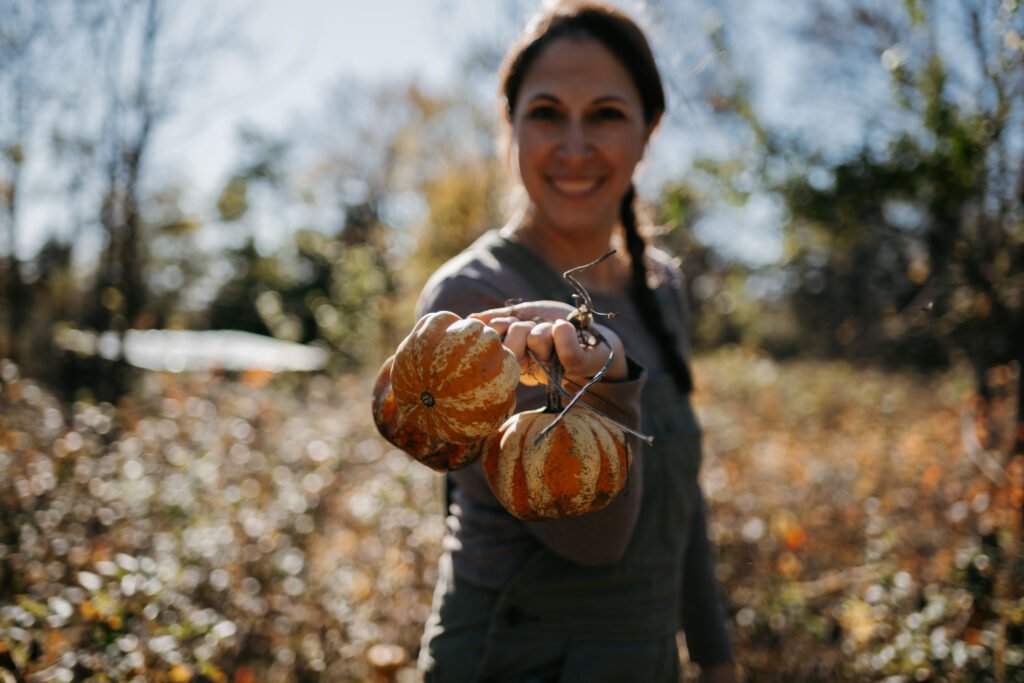
And while she builds it, she has one small thing to ask of the rest of us. Find your local farmer. Find your local beekeeper, and ask for a few jars of honey instead of the big bottle at the warehouse store. Find the neighbor with fresh eggs and bring them an empty carton every week. Find the baker who opened her own little shop, the cheesemaker turning goat’s milk into something remarkable. “Support the individuals,” Tina says. “Find your local producer, and support them.”
Two communities. One table. Tina Carlson is busy setting it.
###