
The Numbers Don’t Add Up
Jacci Espinosa spends her days making the numbers work.
She’s the finance director at a Hutchinson nonprofit that works to keep rents below market rate for families who need it. The organization runs on a staff of 20-some people, and keeping the books straight is not always easy or simple, but it is her mission.

But there’s one set of numbers she hasn’t been able to make add up: the cost of staying healthy.
Jacci’s story began in 2019. First it was hives, then a blister on her ankle that wouldn’t heal and spread to the bottom of her foot. She went to doctor after doctor, and each one had a different guess.
“They kept telling me it was a skin infection,” Espinosa said. “I went through antibiotics, antifungals, creams that cost more than my car payment. None of it touched it.”
Then her ankle started to swell. Some days she couldn’t walk. She missed work. Convinced something was broken, she went to the emergency room, where she learned that Inflammation had built up so much that the bones in the top of her foot were compressing every time she took a step.
“There were days I couldn’t walk,” she said. “I was in my 30s, sitting on my couch, wondering if this was just going to be my life now. The doctors always seemed a little dismissive. I had lots of X-rays, lots of tests, all of it coming out of pocket, and it didn’t seem very personal.”
It took years and a dermatologist to finally diagnose her with palmoplantar pustulosis, a stubborn form of psoriasis that is resistant to most remedies. She started methotrexate, a low, once-weekly dose of a drug more commonly known for treating cancer. It helped some, but the swelling didn’t go away.
Later, a rheumatologist looked closer and diagnosed her with psoriatic arthritis, which had gone on long enough that she was close to permanent damage in her ankle.
The drug that could actually control it, a biologic called Cosentyx, costs $8,000 a shot. Espinosa qualifies for a manufacturer’s patient assistance program that covers it, at least for now. Her dose recently doubled to two shots a month, and her doctor is providing samples while she waits to see if that assistance will keep covering the difference. The fund will run out soon, and she doesn’t know yet if she’ll qualify for a second year.
And while the shots might be covered, almost nothing else is.
Every rheumatologist visit costs roughly $170 out of pocket. Labs run $100 to $200 every 90 days. Add in the methotrexate, the urgent care visits, and the inhalers, and Espinosa has been running a years-long balance on a credit card just to barely manage her treatment.
Insurance hasn’t been the answer, either. A marketplace plan for her alone runs $700 a month. Covering her whole family would run about $1,500 – far more than they can afford. As a couple, she and her husband, William, made $600 too much a year to qualify for a Marketplace subsidy, yet far too much to qualify for Medicaid in a state that has, for more than a decade, refused to accept federal expansion of the program.
She recently got onto a Marketplace plan through a new benefits package at work and is hopeful this might ease the financial strain of meeting her healthcare needs.
It Doesn’t Have to Be This Way
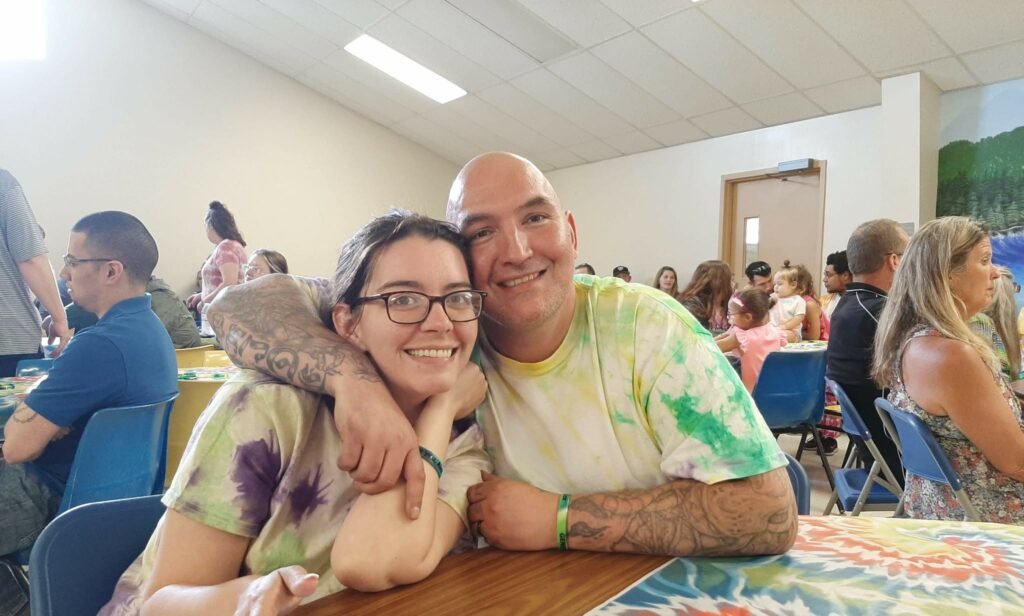
Espinosa and her husband William never qualified for Medicaid since they got married and their two incomes were combined on paper. She knows people who’ve legally divorced just to separate their finances and keep their coverage.
“That’s not a hypothetical,” she said. “That’s a thing people I know have actually done.”
She believes expanded Medicaid would have caught her disease years earlier; instead, her diagnosis took six years after the first symptoms showed up. The price is higher than inconvenience, pain, or frustration – Espinosa said about a study showing that complications from untreated psoriatic arthritis can significantly shorten a person’s life expectancy – in some cases as much as a decade or more.
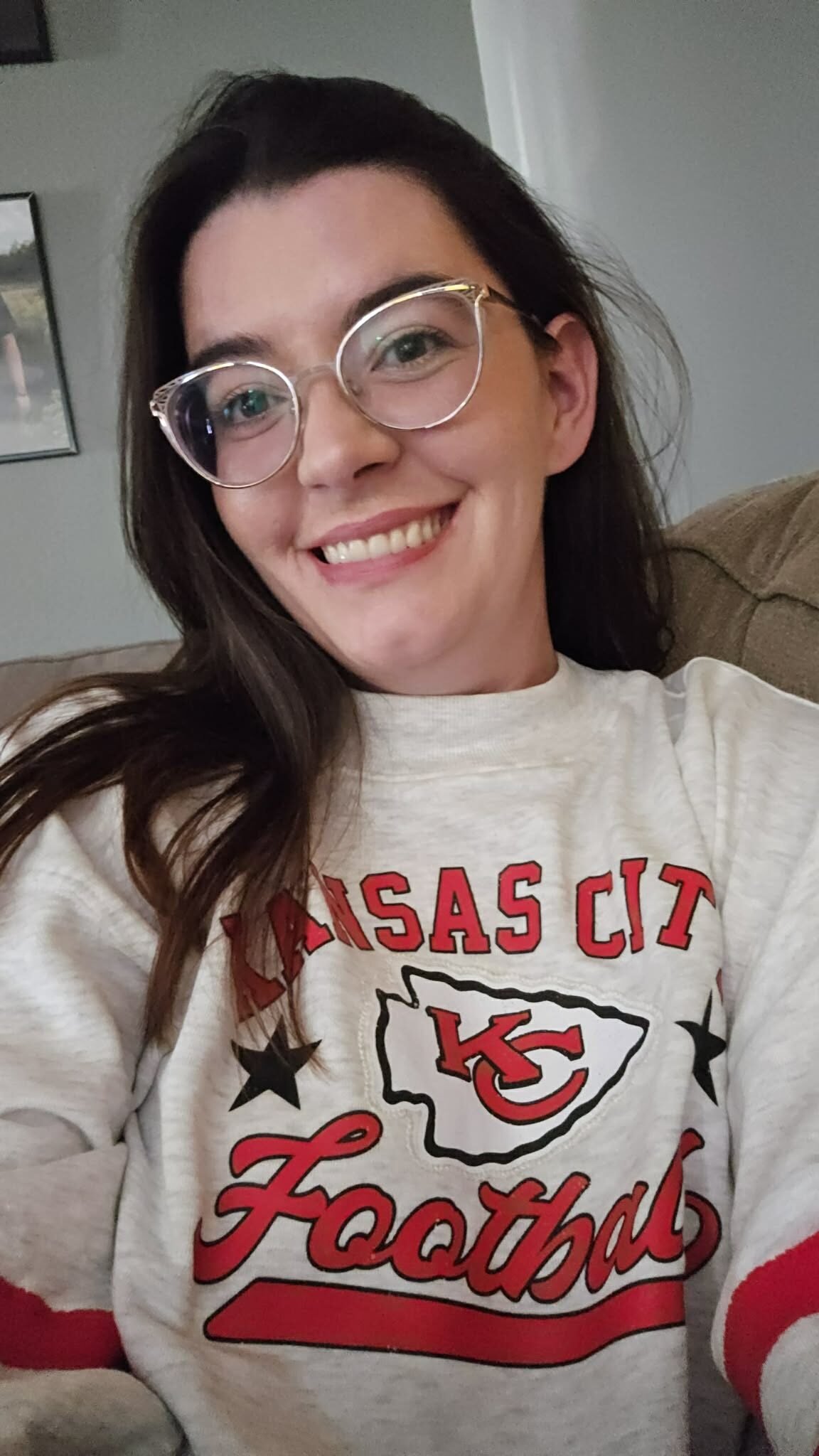
She thinks about that number more than she’d like to.
“It shouldn’t be that hard,” Espinosa said. “People need to be able to access the help that they need. I kept thinking, what if this had been something more serious? What if it took five or six years to figure out something that was actually going to kill me? They say inflammation is a gateway to everything else.”
What frustrates her most isn’t just the bills. It’s the assumption baked into the whole system that people without insurance must be lazy, or addicted, or somehow responsible for their own bad luck.
Espinosa has been part of Hutchinson’s recovery community for years, and co-founded the Kansas Recovery Network. She sits on the Reno County Community Corrections Advisory Board. The felonies from her old life of addiction are expunged now, but she knows firsthand how easily people with a history like hers get written off, and how little that has to do with whether they work hard or take care of their families.
Employers aren’t the villain in her telling, either. A group health plan runs roughly $600 per employee, more than many small employers, especially ones with part-time or hourly staff, can absorb. She traces the root of the problem further back, to a wartime decision that was never truly revisited: employer-based insurance took hold during World War II, when wage controls pushed companies to offer benefits instead of raises, and it’s been the backbone of American health coverage ever since, even as the economy that supported it has changed completely.
“It doesn’t have to be this way,” Espinosa said. “We built this system by accident, out of a wage freeze 80 years ago, and we’ve never gone back and asked if it still makes sense.”
She’s not interested in telling anyone how to vote. But she does think people need to start talking to each other again, actually talking, instead of assuming the worst about their neighbors. Maybe if that happens, we’ll develop a deeper understanding and appreciation of the struggles people face instead of leaning into the rage bait and curated talking points.
“I’m not asking anyone to feel sorry for me,” she said. “I have a job, I have insurance, I have a family that’s fine. I’m asking people to think about how many people don’t have any of that, and what happens to them.”
###