
A Life Lost to Gaps in Care: A Kansas Story About Medicaid
“Expanding Medicaid is an important fight for me because of what happened with my mother,” said Kansan Chandra Dickson, whose mother died of non-Hodgkin lymphoma, a curable cancer if diagnosed and treated in time.
Neither happened with Dickson’s mother. Spring 2026 marks the 10th anniversary of her death. “And in 10 years, nothing has changed.”
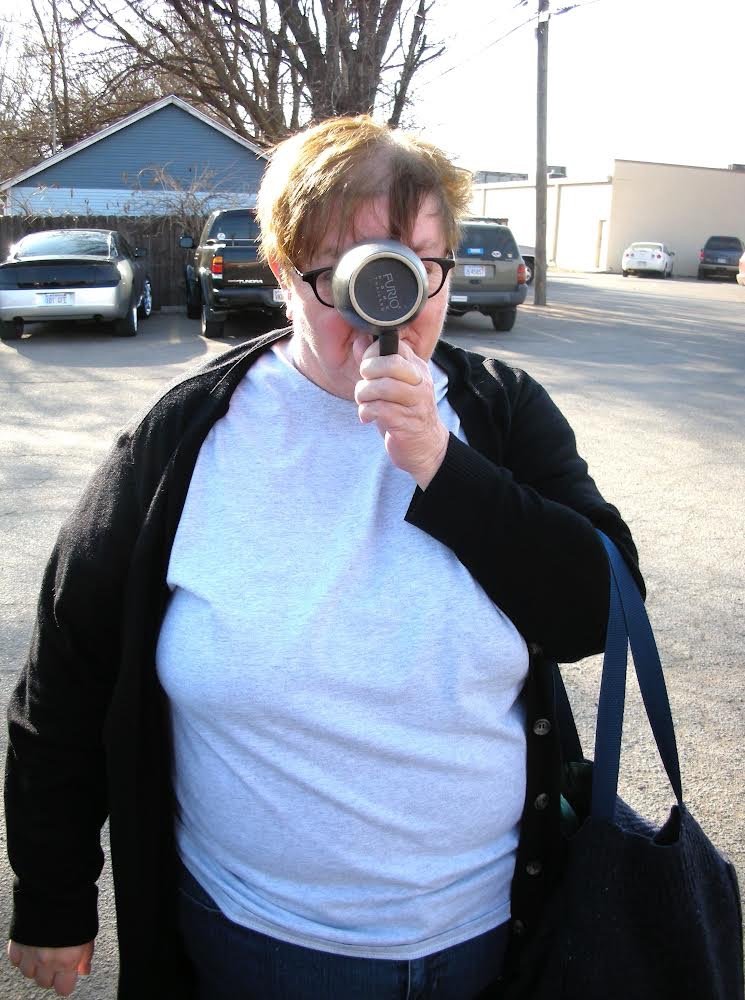
From birth, Jo Anne Dickson raised her only child as a single parent, working first as a restaurant server and later in an office job with a small non-profit that paid $4.24 hourly and didn’t offer insurance.
“We were poor, but we were also well-read, educated, with thousands of books in the house,” Chandra said. “She wanted me to go to college.”
Chandra fulfilled her mother’s wish. Jo Anne left her office job specifically to pursue a master’s degree full time. “She started college the same day I started grad school,” Chandra said.
Chandra went on to be an award-winning author, an English professor, and an activist employed at nonprofits including Alliance for a Healthy Kansas, which advocates for improved health care for marginalized Kansans. She currently teaches English full time at Butler Community College. And, like her late mother, she reads voraciously. “All sorts of stuff,” she said. “Fiction, NF, poetry.”
No Safety Net
Chandra grew up in a family without health insurance. Her mother suffered from a buffet of chronic health issues: asthma, recurring pneumonia, later diabetes and two bouts of uterine cancer. For the first five years of Chandra’s life, her mother was in the hospital every year, costing her lost wages and babysitter payments.
They didn’t receive benefits such as SNAP; “I’m sure my mom had too much pride,” Chandra said. Jo Anne did have health insurance for the uterine cancer, “and then they fired her because she had taken too much time off,” Chandra said. “Before the introduction of the Affordable Care Act, cancer was a pre-existing condition. That’s part of the reason my mother switched parties to vote for Obama.” She said her mother evolved over time, overcoming her pride and concluding later in life that her health care was important to her.
In 2016, two years after Medicaid expansion had been made available essentially cost-free to states to help cover Americans who didn’t qualify for ACA insurance, the Kansas legislature voted for expansion. But then-Governor Sam Brownback vetoed it, and since that time, the Kansas legislature has refused to vote on the option despite strong support among their constituents. (A November 2025 survey found that nearly 75% of Kansans support expansion.)
Jo Anne received diabetes care from Hunter Heath, which treats people with no insurance. “They could refill her inhalers, so she no longer had to go to the hospital for weeklong stays.” But they couldn’t treat cancer.
Troubling Signs
After Jo Anne began losing weight, she guessed it had to do with the nominally better care she was taking of herself: a bit more exercise, better eating. But the weight kept coming off.
“You can’t just call and make an appointment with Hunter Health,” Dickson said. So she had to wait. The doctor advised getting a CT scan, but she didn’t have insurance. So the small, nonprofit health provider applied to Project Access, which then had to process her paperwork and put her in line for the service.
“She had gone to Hunter Heath before Christmas. Her CT didn’t happen until February.”
After getting the CT, the next step in a typical charity cancer care procedure is for the scans to go back to the doctor, who then must find an oncologist to officially diagnose the cancer — for free. For Jo Anne, that diagnosis only came about because of an emergency trip to the hospital and her daughter’s advocacy for her while there.
In early March, Chandra took her mother to the ER because she was unable to breathe. Chandra told them Jo Anne probably had cancer, based on the medical research her mother had done in her university studies.
“So I told the doctor, and she said, ‘oh, I think it’s just her asthma,’” Chandra said. “I told her to look at her Xrays, and she said they didn’t have access to them. So she found someone to read them, who happened to be the head of oncology and diagnosed my mom in the ER.”
Jo Anne remained in the hospital for five days. They made a March 8 appointment with an oncologist. “And the only reason she got that done was because I took her to the ER,” Chandra said. “Otherwise, we would have still been waiting for the CT scan.”
Chandra said the oncologist was optimistic about her survival chances. “Even with the kind of non-Hodgkin lymphoma my mother had, one of the fastest-growing ones, it’s still considered curable if it’s caught in time and treated.”
The oncologist wanted her to start chemo on March 11. But “when the doctor found out she did not have health insurance, he said. ‘Oh.’ And the chemo was off the table.”
Money Changes Everything
Dickson noted that there are places that help pay for treatment, but they generally help only once. The other financial help option is to ask the drug company to pay for the chemo sessions. But, Dickson noted, the burden of proof is on the patient, who must first apply for and be denied state disability insurance.
“So my mother didn’t get to start chemo that day. And that was her chance,” Chandra said. “If she had gotten to start when they wanted to start her, my mother may still have died — we don’t know how long that lymphoma had grown in her body. But we do know that she never got a fair shot to fight what we consider a curable cancer.”
The paperwork needed before treatment could begin continued to elude them. In late March or early April, a friend of Chandra’s loaned her $500 for the cost of one treatment. It was her only one. The cancer had spread to her kidneys, and they had started to fail.
“My mother spent the last eight days of her life in a medical intensive care unit,” Chandra said.
In the end, Jo Anne Dickson’s hospital bill was $750,000. A year after her mother’s death, Chandra got a call from a Wesley Hospital lawyer informing her that they were putting her mother’s estate — “and by estate I mean about $50 she’d had in a bank account” — into probate so that she could be approved for disability post-death.
“So in the end, who paid for her hospital bills?” Chandra asked. “Kansas Disability.” The taxpayers. Of course, she noted, because of the state program’s bargaining powers, “I’m sure they negotiated it down, because that’s how it works.”
Speak Out — and Vote
“Most people don’t speak up about Medicaid expansion, because there’s a lot of shame behind poverty,” Dickson said. “I feel a lot of disappointment with our state leaders, a lot of sadness that my mom didn’t have the same insurance that our state leaders have.”
“Understand that even if you are struggling financially, you deserve health care, too.”
She urged fellow Kansans to contact their state legislators and representatives. “Stop voting for people who don’t want the best for all Kansans. Understand that even if you are struggling financially, you deserve health care, too.”
# # #