Farmer Jack-of-All-Trades: Jake Johannes and Sacred Sun Farm
“The market is one of the oldest bastions of civilization,” said Jake Johannes, the owner of Sacred Sun Farm in Kansas City and a regular presence at the Saturday Brookside Farmers Market. “It’s where people traded their wares. The market is as old as civilization itself.”
After leaving each farmer’s market, “My face always hurts from all the smiling,” he said. “I think markets are good for the soul.”
Sacred Sun Farm sells nutrient-dense foods such as fresh-milled organic flours and grains, plus dozens of assorted medicinal herbs. It also offers herbal classes, work trade programs, and a farm share. Only three acres are used for growing diverse plants most of the year, and the staff is small.
“Connection is key here, folks,” its website reads, referencing varied opportunities for community members to get involved, through purchasing or sweat equity. Family friends have worked there for a season and then opened their own plots or taken jobs related to food or agriculture. One has a dragonfly farm and sells to another community farm. Another teaches scuba diving and works with microgreens and “does underwater yoga to slow down their breathing.”
The “connection” in Johannes’ work carries into his own family. His daughters, he said, have a “sense of place; they fit here.” His family shares produce with neighbors.
“One guy dropped off sweet corn because he had a great year,” he said. “Neighbors further out drop by and pick up stuff weekly. That’s been great.”
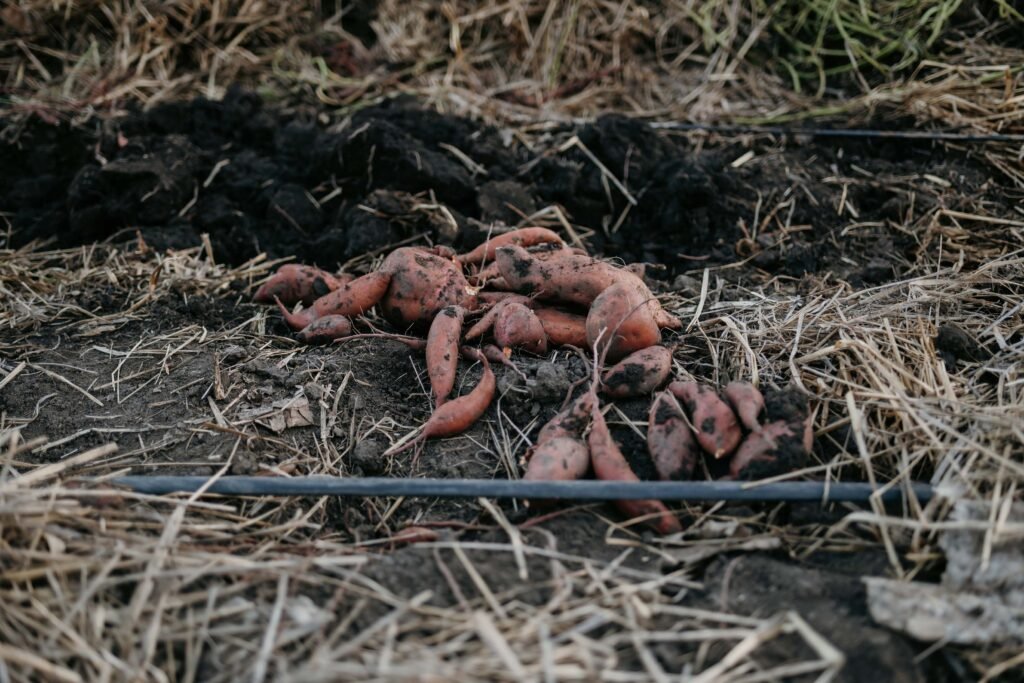
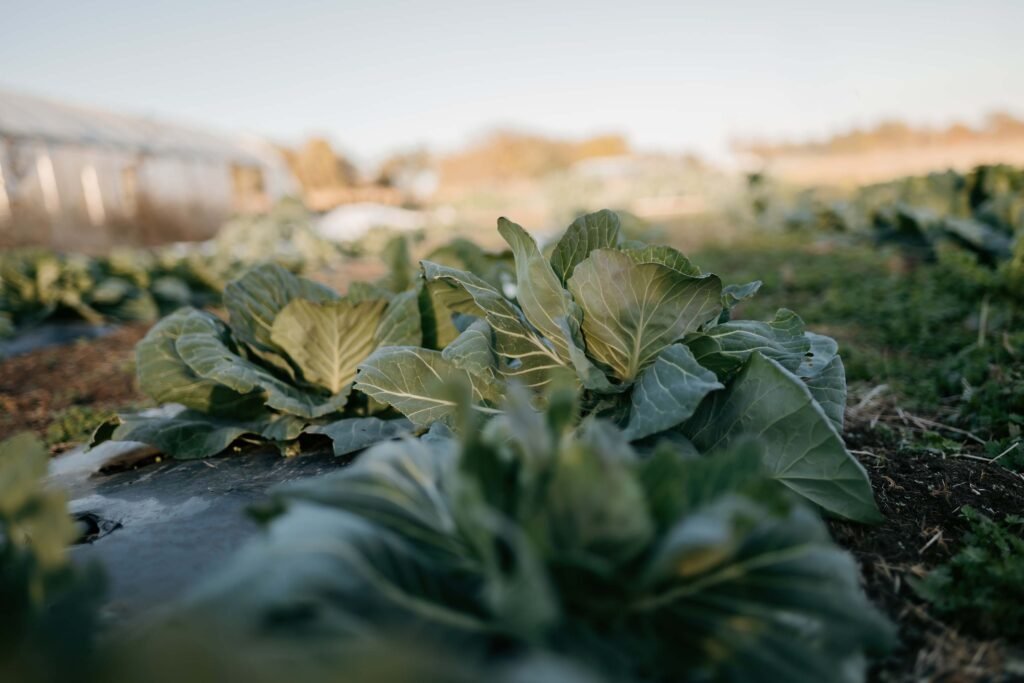
Father and son: Jacks-of-all trades
Johannes grew up in a farm family but set out to be an architect. His background is varied. He’s “a Jack-of-all-trades; I’m not an expert at anything.” He worked at a factory, a dairy farm, and staffed a grain elevator.
He taught at the University of Kansas, but returned home when his daughter Aster was born. Eventually, he got an architecture degree and practiced in Kansas City for a few years. Also in his portfolio was time teaching English in Japan, where he rediscovered his love of food and farming. In 2010, he returned to his family farm to convert the operation to organic.
He had missed farming, but added, “I had to learn a different way of doing it, because there wasn’t any money in it. I always wanted to bring something back to rural Kansas, having grown up there. So, I started producing specialty crops and marketing them locally.”
He moved back to his parents’ place and converted his focus to organic farming, learning about commodity-level organic grains and niche greens before starting Sacred Sun Farm with his wife, Jess.
“I idolized my father,” he said, “and wanted to carry on in his footsteps. He instilled in me the value and virtue of being a simple Kansas farmer. He was anything but simple. He was a Jack-of-all-trades, too. Farming allowed and encouraged that — you have to have all those niche skills to take care of your stuff, fix your things, make it all happen.”
Johannes wanted to do a wide assortment of things, and “farming accommodates this well,” he said. The notion he’d had that farming must be full time to count was “total baloney.” “To be a farmer in whatever capacity you want to be and still contributing is really meaningful.”
Johannes noted the heavy competition in farming in the 1980s, which focused increasingly on cattle and grains.
“The whole mantra was ‘get bigger or get out.’ There were more local farmers then, individual farmers,” he said. He noted a trend in places like Kansas and Iowa where people stopped farming and started aggregating, generational farming died down, and farming became corporate.
“I think this is something that can counteract that,” he said of the kind of farming he and others have taken on.
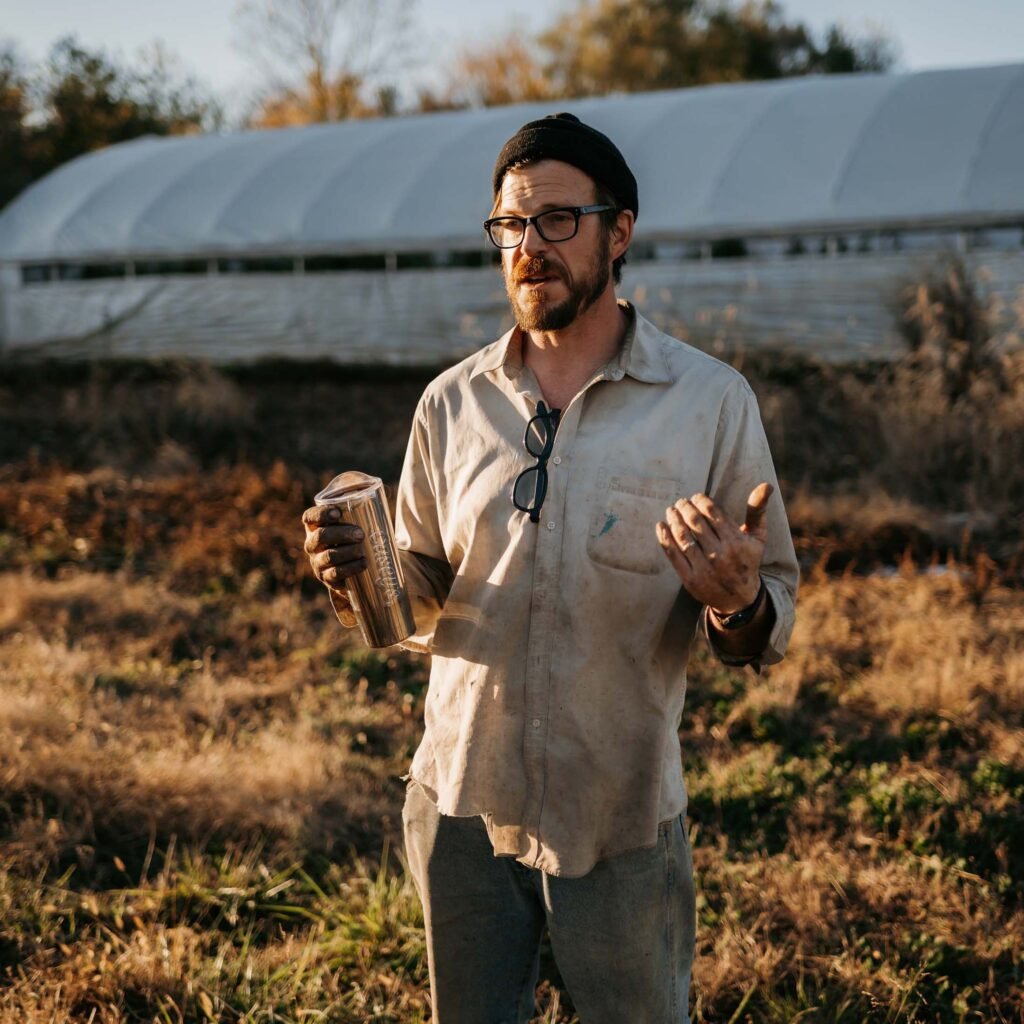
Versatile interests
Johannes said that by nature, farming lends itself to other activities.
“I’d love to see a field of architecture in agriculture,” he said. “I’ve always had an interest in farms and silos, even crumbling ones.”
Johannes also loves music.
“The house is filled with instruments,” he said. “I wanted the girls to have a space to practice. Kalea, my oldest, is in a punk rock band, Severe Thunderstorm Warning.”
“I was a woodworking teacher for kids at the elementary school — carving, making things with my hands.
“When I was young, I thought I was going to find the magic key, the right combination to make it work, and then it was going to be easy and successful and all of that,” he said. “I was always going into a thing. We’ll try strawberries! We’re gonna do this!” One year he tried planting red kidney beans using an antique grain drill. “It was really exciting, and then it didn’t work out.
“You can get knocked down, but all those iterations were really meaningful. They’ve given me a lot of humility. Farming always keeps me interested. No season’s the same. Life changes; you can adapt to that. Some try farming for a while and get tired of it, or their life doesn’t accommodate it; they need to do other things.”
But Jake Johannes? “I joke about my farming addiction.”
Deep in all of us
Johannes worries there are not enough people interested in farming, that people won’t have enough to carry on the next generation, and that all farming will turn corporate. He said he wishes that those elected and other leaders understood farming’s relevance to the culture of its regions: “Farming, growing food, is deep in all of us.”
He encouraged people to explore growing their own foods with a small garden. “Grow something with the intent of giving it to neighbors,” he said. “Indulging in that role is really meaningful. It gets people more tuned in to their region, to seasonality, to the feeling they belong in a place. It’s always easy to overproduce, to be able to be generous, to give to others.”
He asked, “What can abundance look like? How can people see that shopping at the market has a bigger impact than just giving people money?”
He said that his girls love meeting and interacting with people. “There’s intergenerational play there. Vendors love my girls at the market.”
Buying local, Johannes noted, is the easiest way to support local farmers. “Nothing against commodity farmers, they work hard, they have to earn a living,” he said. “But it’s hard to interface with them.”
He noted that shopping at local markets — which means voting with your dollars — is also an important part of cultural life. “To have immediate action and healthier food makes all of us stronger,” he said.
For Jake Johannes, “Farming has kept me young; it’s healthy for me. Not just by having immediate access to the freshest food. My mental health is great — I have the time and space to think. It is hard work and doesn’t pay much, but the non-monetary benefits are vast.”
###